
Lately I’ve been thinking a lot about an old friend, somebody I’ve known since my army days, and one of the cleverest and funniest blokes I’ve ever met.
Let’s call him Dave.
Dave left the army while I still had a couple of years to push. For his nine years he’d been rewarded with two stripes and a medal, for active service in Northern Ireland.
I clearly remember the last time I saw him as a serving soldier. I remember how he laughed at us on the day he left. He was headed for the real world and freedom, while we, with our poxy little bedspaces and pork pie haircuts remained trapped in “the system”.
It was several years before I saw him again, by which time I had myself taken the road to “freedom” in civvy life and struggled daily with the consequences of that decision.
To my surprise Dave arrived at the reunion wearing a crisp dark blazer and regimental tie, his one medal with its purple and green ribbon on proud display. Dave had evolved. He was now an ex-serving soldier, a veteran, and over the years he’d discovered that this actually afforded him more status in the eyes of the world than he’d ever had while in uniform.
Dave was still Dave of course. He’d been a trickster and a rebel in the old days and never worried about the kind of trouble it got him into. But I soon realised that he’d done something with his memories, adjusted them to fit tighter into a different narrative than the one I remembered.
Don’t we all do it to one degree or another?

He’s well into his sixties now, has been a civilian since the age of 27, but still thinks of himself as a “rifleman”. And these days those altered memories have become the cast-iron facts of Dave’s story.
And he has enemies. He sees them everywhere. His enemies are not usually specific individuals. There are no blood feuds or vendettas hanging over his head. He has no gambling debts, and he gets on fine with most of his family, his neighbours, and with the crowd down the pub.
No, the enemies that plague his life are of a more generalised and varied sort and tend to fit handily into particular categories or types. Naming them helps him to focus and makes them easier to identify, especially when pointing them out to others.
In no particular order:
Lefties; Greens; Socialists; Liberals; Vegans; Muslims (inevitably); Immigrants, illegal or otherwise; “Snowflakes” who want to ban golliwogs and fox hunting; White poppy wearers, or those who don’t wear a poppy at all; Guardian readers; Anti-monarchists, especially if Irish or Scottish; Foreigners of all types whose first language isn’t English, (but especially the French);
And army veterans who don’t play the game the way he does.
You get the idea.
Some of those on the list are black or dark skinned, many are not. So whatever else you might accuse him of you could not call him out for being exclusively a racist.
The one thing they have in common is their tendency to stand out for being “different”. Different from Dave, that is. By definition of course, enemies are different from us and observe customs that are not our own. And the epitome of difference is the foreigner.
And if that foreigner happens to be a dark-skinned Lefty who hates the Queen, so much the better.
In recent years his list of enemies has grown in leaps and bounds. Brexit gave him an unprecedented opportunity to widen the scope of his hunt. “Remoaners” seemed to be everywhere he looked. Some lived next door or up the street. Shockingly there were even one or two in his own family.
Facebook gave him a platform from which to express his views about those he hated. It also allowed him to connect with like-minded souls with whom he could exchange bits of news to help stoke the fire. But a brief flirtation with the BNP ended when he saw that their violence was too random and ill-disciplined. They hated everyone, even themselves.
Of course these days everyone’s doing it – finding enemies and eviscerating them online that is. But it has a special quality when the hunter is a military veteran. In Dave’s case for example, after leaving the army he simply carried on doing what he’d been trained to do – search for and find the enemy, then do whatever he was able to do to destroy it, almost as though he was carrying out a subliminal instruction.
Although he’d never admit it Dave needs his enemies a lot more than his enemies need him. Having an enemy is important to him, not only to help him define his identity and demonstrate his own worth, but also to provide him with an obstacle against which to measure his system of values .
I doubt that he could manage otherwise. His grievances give him a reason to get up in the morning, get the blood pumping and the adrenaline flowing. The need to have something to react against has become second nature, almost like the daily intake of a drug, helping to reassert his sense of self and the things he stands for. So much so that …
… If there were no enemy he would have to invent one.
I still see Dave from time to time. He’s not the man he used to be, but he’s not a bad person either. He took good care of his kids, loves his grandchildren, and is good company over a couple of pints.
Back in the day we talked about everything under the sun, being still young enough to wonder about the people we could become, the women we would meet and what our kids would grow up to be. Now we talk mainly about the past and our supposed glory days, the only thing we have in common.
And I have to tread very carefully. I walk a fine line. It would take very little for me to become one of Dave’s enemies.


 And what of the artisans who actually did the work? Medieval carvers were neither elite artists nor holy men. Socially they were considered to be on the same level as skilled labourers. But the stonemasons and carvers had an awareness of the etheric world that breathed freely in the countryside in a time before the city encroached upon their sacred places. These men, wary of the possibility that their deeply rooted pagan beliefs were under threat from the new religion, were in a unique position to pass on the message of the Green Man to future generations. This they did in abundance. Nevertheless, despite their skill and dedication no mention is made of the Green Man in any Masonic documentation or ritual.
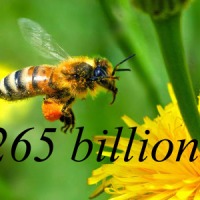
  265,000,000,000
 Cast your vote
 “As crude a weapon as the cave man’s club, the chemical barrage has been hurled against the fabric of life – a fabric on the one hand delicate and destructible, on the other miraculously tough and resilient, and capable of striking back in unexpected ways. These extraordinary capacities of life have been ignored by the practitioners of chemical control who have brought to their task no “high-minded orientation,” no humility before the vast forces with which they tamper.”
 60%
60%
 “This time, like all times is a good one, if we but know what to do with it.”
 Business as Usual
 A Vested Interest
 Another Day, Another Dollar
 Groundup










 thegreenmanweblog
You must be logged in to post a comment.